New multi-million grant brings hope for stopping Parkinson’s disease
The project is carried out in collaboration with Aarhus University and aims to develop therapies that can remove and prevent the spread of a harmful protein in the brain – the underlying cause of the disease.
“This project could bring us very close to a treatment that truly changes the course of the disease. If successful, it would be the first time that the protein aggregates driving Parkinson’s disease are directly removed from the brain,” says Simon Glerup, Co-founder and CSO of Draupnir Bio and project lead of DESYNA.
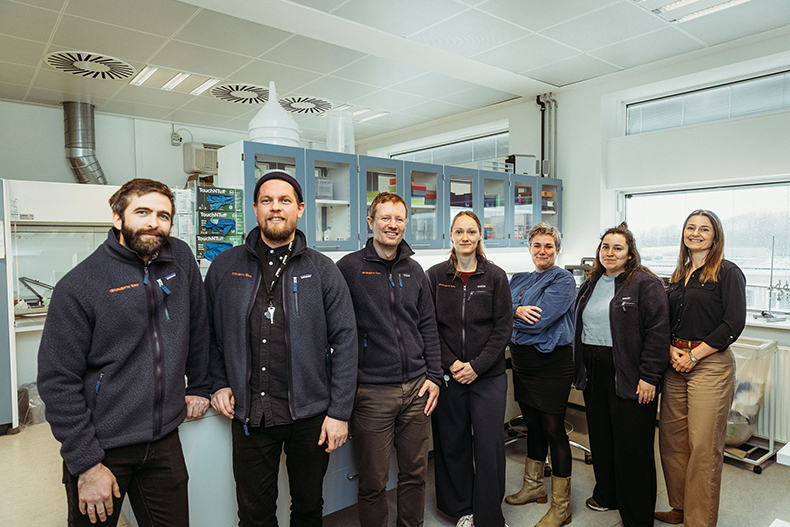
Team Draupnir Bio
Targeting the root cause of the disease
Today, treatment of Parkinson’s disease is primarily focused on alleviating symptoms. The progression of the disease itself cannot yet be slowed.
The DESYNA project takes a different approach, aiming to directly address the underlying mechanism that drives the disease.
The focus is on the protein alpha-synuclein (α-syn), which accumulates in the brains of patients and forms toxic aggregates. These aggregates damage nerve cells and gradually spread throughout the brain.
The new treatment is designed to identify and break down these aggregates before they spread further. The ambition is therefore not only to relieve symptoms, but to alter the course of the disease.
This approach holds significant potential: new treatment options, improved quality of life for patients, and a possible breakthrough in the treatment of neurodegenerative diseases.
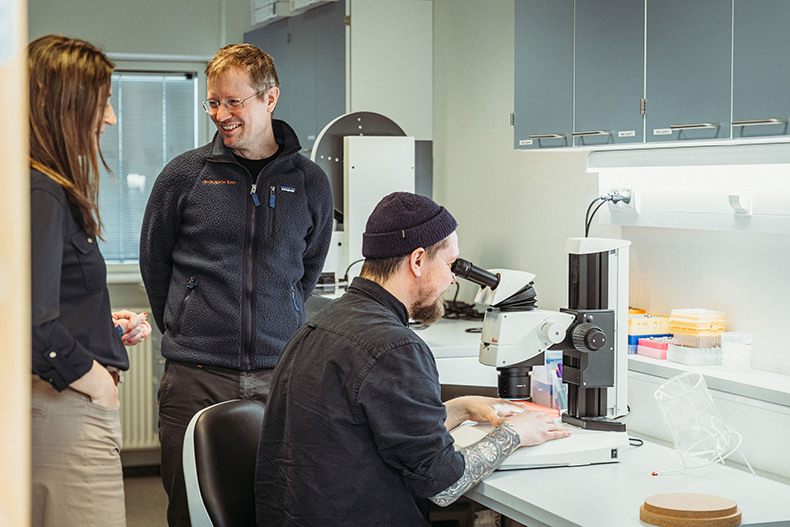
Draupnir Bio is part of INCUBA Skejby, where the company has its own laboratories.
Bridging biotech and research
DESYNA is built on close collaboration between Draupnir Bio and Aarhus University, combining advanced targeted protein degradation technology with deep scientific insight into Parkinson’s disease.
The treatment works by first binding to the harmful protein aggregates and then activating the cell’s own system to break them down and remove them.
Professor Daniel Otzen from Aarhus University explains:
“We know that the accumulation of alpha-synuclein is central to Parkinson’s disease. By targeting this process directly, we hope to do more than treat symptoms – we aim to change the course of the disease itself. This offers entirely new hope for patients and their families.”
Over the next three years, the researchers will develop both injectable and oral therapies, with the goal of advancing preclinically validated candidates to the next stage by 2029.
Collaboration across INCUBA
Draupnir Bio is part of the life science environment at INCUBA Skejby, where the company works in close proximity to both research environments and clinical practice.
The daily proximity to other companies, researchers, and healthcare stakeholders creates strong opportunities for knowledge sharing and collaboration. This makes it easier to test ideas, refine solutions, and move research closer to real-world application.
“Being part of the INCUBA environment allows us to stay close to both research and clinical practice. It provides a strong framework for collaboration and knowledge sharing in our day-to-day work,” says Simon Glerup.
At INCUBA, companies, hospitals, and universities work side by side, creating a shared foundation for developing new solutions where knowledge can be quickly exchanged and put into practice.
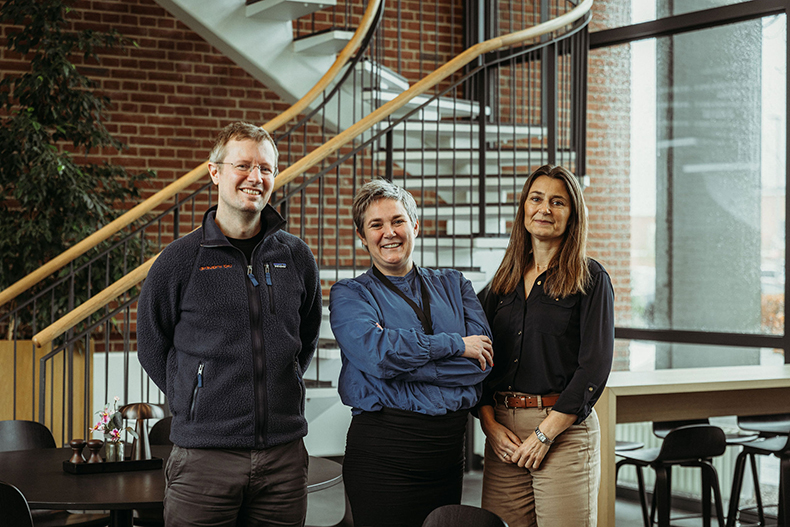
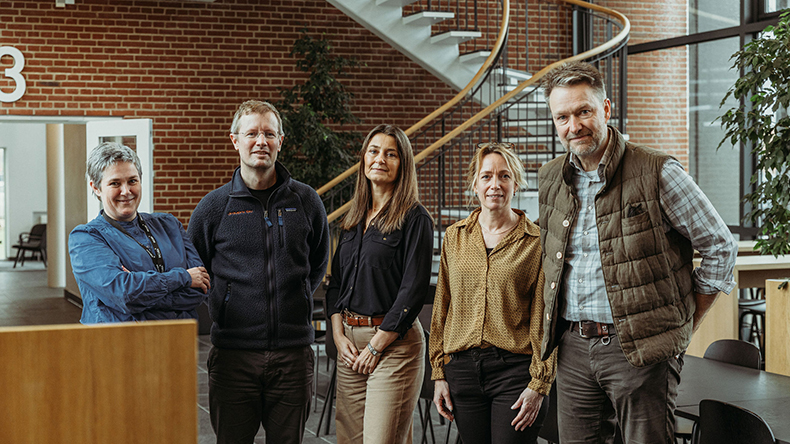
Simon Glerup, Camilla Gustafsen & Line Slemming, Draupnir Bio
A step closer to future treatments
With a grant of DKK 26.7 million from Innovation Fund Denmark and a total project budget of DKK 36.4 million, Draupnir Bio is now entering a critical phase in the development of its technology.
The project also highlights how strong research environments and companies can work together to create solutions with the potential to make a real difference for patients worldwide.
“This project is a strong example of how collaboration between research and companies can lead to breakthroughs in some of the most complex diseases. At INCUBA, we work actively to bring these environments closer together, and projects like this demonstrate the level and potential of the life science ecosystem in Aarhus,” says Jacob Doktor Mogensen, CEO of INCUBA.
- DKK 26.7 million grant from Innovation Fund Denmark
- Total budget of DKK 36.4 million
- 3-year research project
- Collaboration between Draupnir Bio and Aarhus University
- Develops treatments that break down harmful protein aggregates in the brain