Aarhus strengthens its position as a biotech hub with new multi-million grant
The project is a collaboration between ARCEDI, Aarhus University, and Aarhus University Hospital, with the ambitious goal of developing a new generation of non-invasive prenatal screening. As early as week 9 of pregnancy, it aims to provide expectant parents with direct genetic insight into the health of the fetus – without any risk.
“Is my baby OK? That’s the question every pregnant woman asks. We are working to provide an early and precise answer using a simple blood sample from the mother. Around 2% of all pregnancies are affected by serious genetic conditions, and more than half of these are only detected after birth. We want to change that. For us, it’s about earlier detection. It’s about informed choices. And it’s about enabling the right medical treatment as early as possible – in some cases already during pregnancy or shortly after birth,” says Mads Tang Dalsgaard, CEO of ARCEDI.
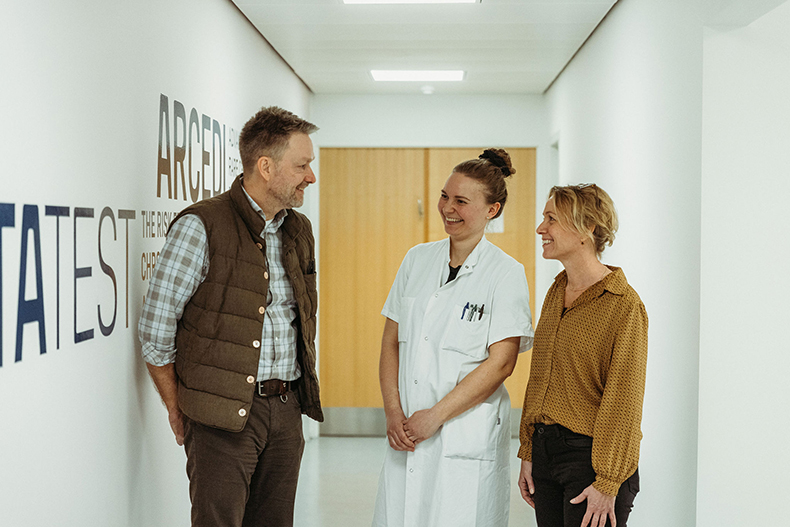
Mads Tang Dalsgaard, Maiken Kristensen & Lotte Hatt, Arcedi
From risk assessment to real genetic insight
Today, early screening and risk assessment during pregnancy are primarily based on statistical models. With the GENIUS project, the goal is instead to obtain precise and comprehensive genetic information based solely on the actual biology of the fetus.
At the core of the technology is ARCEDI’s method for identifying, isolating, and analysing intact fetal cells in the mother’s blood. This enables far more detailed diagnostics than existing methods and also provides new insights into how both maternal and fetal genetics influence drug metabolism and treatment during pregnancy.
The potential is significant: more accurate screening, better decision-making for expectant parents, and new opportunities for personalised medicine during pregnancy. More than half of pregnant women use medication, yet genetic differences that can significantly impact both treatment efficacy and fetal safety are rarely considered in clinical decision-making today.
ARCEDI is a global leader in cell-based non-invasive prenatal diagnostics and has already established a strong IP position in this field.
From research to clinical application
GENIUS builds on more than ten years of research and is led by Professor of Genetics Ida Vogel from Aarhus University and Aarhus University Hospital. The project also involves leading researcher Professor Lars Henning Pedersen from the Department of Obstetrics and Gynaecology and exemplifies how close collaboration between research, clinical practice, and industry can accelerate the development of new healthcare solutions.
ARCEDI has already taken the first steps towards market adoption with its commercial test, EVITA TEST Complete, which is currently offered in a private setting. With the new grant, the goal is to further advance the technology and make advanced, non-invasive screening available to many more pregnant women, demonstrating its value – potentially as the world’s leading prenatal screening solution for all pregnant women in Denmark.
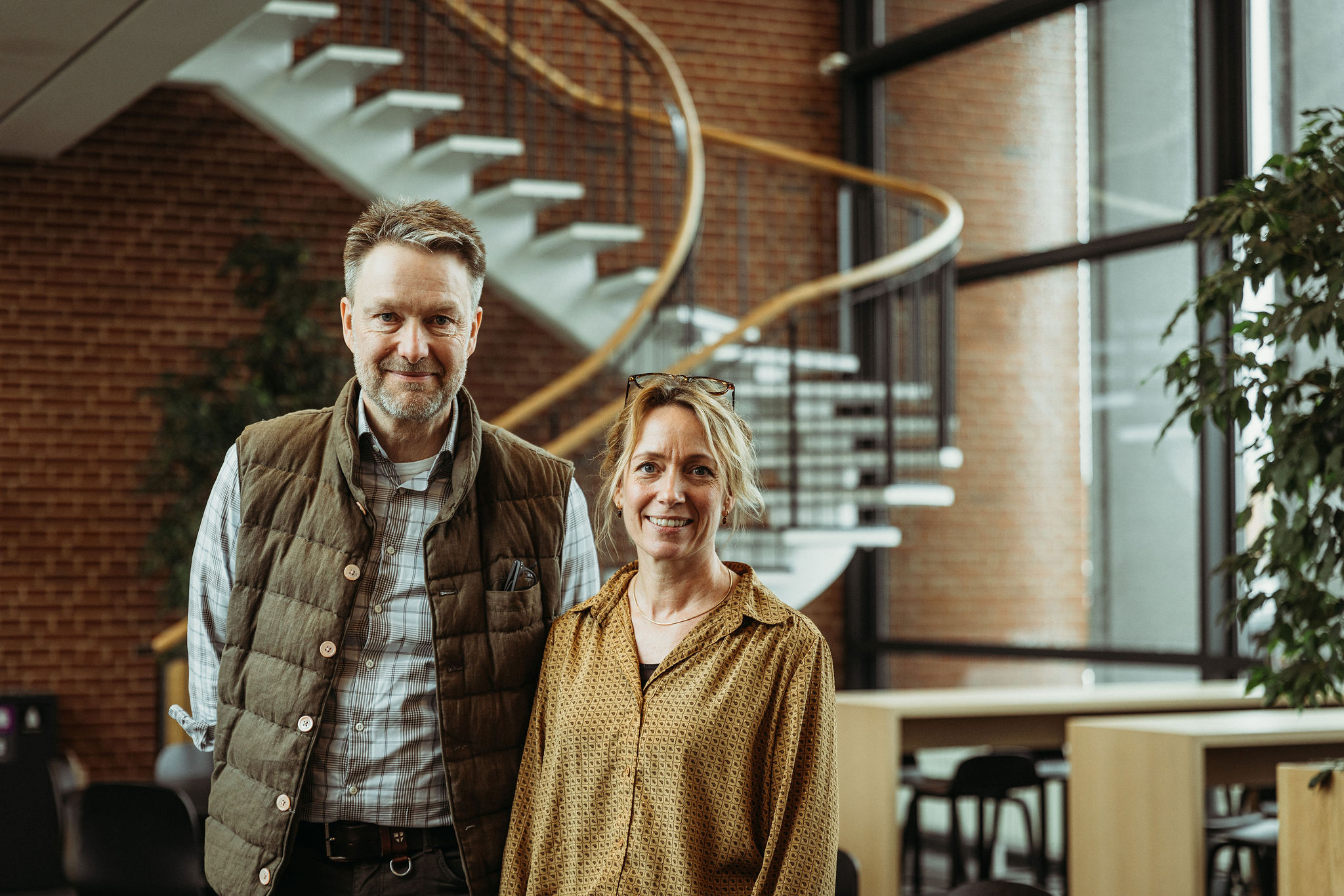
Mads Tang Dalsgaard, CEO & Lotte Hatt, SCO, Arcedi, INCUBA Skejby
INCUBA as a framework for collaboration and development
ARCEDI is based in INCUBA Skejby, where the company is part of a strong life science environment in close proximity to Aarhus University Hospital.
The physical proximity between company, clinical practice, and research has played a significant role in the development. Close dialogue with clinicians and patients, faster translation of research into practice, and a strong interdisciplinary environment are all key elements.
“Being part of INCUBA in Skejby gives us unique access to both research environments and clinical practice. This allows us to develop and test our technology in close collaboration with those who will ultimately use it, helping to bring research closer to real-world application,” says Lotte Hatt, Chief Scientific Officer at ARCEDI.
At INCUBA, startups, researchers, and companies work side by side with a shared ambition to develop and mature new healthcare solutions. The GENIUS project is a clear example of how this kind of collaboration can create results with international potential.
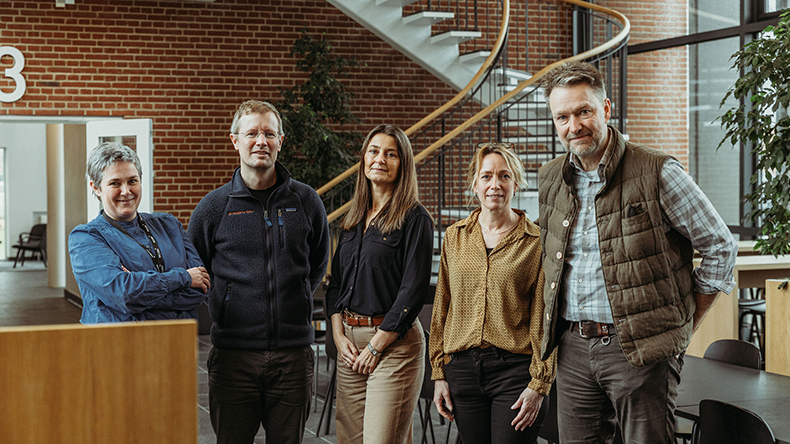
Two INCUBA-based companies, ARCEDI and Draupnir Bio, have received multi-million funding for research that has the potential to push the boundaries of prenatal diagnostics and Parkinson’s disease treatment, respectively.
An important step towards the next generation of health technology
With the DKK 24 million grant from Innovation Fund Denmark, ARCEDI is entering a new phase, where the technology moves from research-driven innovation towards broader clinical application.
At the same time, the project highlights how companies in INCUBA contribute to translating strong research into concrete solutions that not only create value locally but also have the potential to set new standards globally.
“This project is a strong example of what happens when research, clinical practice, and companies work closely together. At INCUBA, we see every day how this type of collaboration can accelerate the development of new solutions, and the GENIUS project holds potential that extends far beyond Aarhus and Denmark,” says Jacob Doktor Mogensen, CEO of INCUBA.
- The GENIUS research project has received DKK 24 million from Innovation Fund Denmark for research into early, non-invasive genetic diagnostics in pregnancy
- Total budget of DKK 32 million
- 4-year research project
- Collaboration between ARCEDI, Aarhus University, and Aarhus University Hospital
- INCUBA Skejby is part of one of Denmark’s most knowledge-intensive areas within life science, health, and biotech, providing a framework for companies that work closely with both research and clinical practice.
- A strong life science environment: INCUBA Skejby is home to a number of ambitious companies and organisations within biotech, pharma, and health, including:
- ARCEDI
- Draupnir Bio
- NMD Pharma
- MedicQuant
- Kripthonite Therapeutics
- Medicus Engineering
- Teitur Trophics
In addition, research and knowledge institutions such as Aarhus University (Department of Clinical Medicine) and cluster organisations are part of the environment.
- Unique location: INCUBA Skejby is located in direct proximity to Aarhus University Hospital, Scandinavia’s largest hospital, and is part of a strong life science ecosystem including actors such as VIA University College, Aleris Hamlet, and MedTech Innovation Consortium.
- Facilities: Companies have access to modern office environments as well as shared laboratory facilities, including both cell labs and advanced equipment. In addition, there is access to shared labs and a lab shop with essential products for daily operations.
- A strong community: INCUBA Skejby brings together startups, scaleups, and established companies in a close collaborative environment focused on knowledge sharing, sparring, and growth. The physical proximity to researchers, clinicians, and other companies enables faster development from idea to solution.