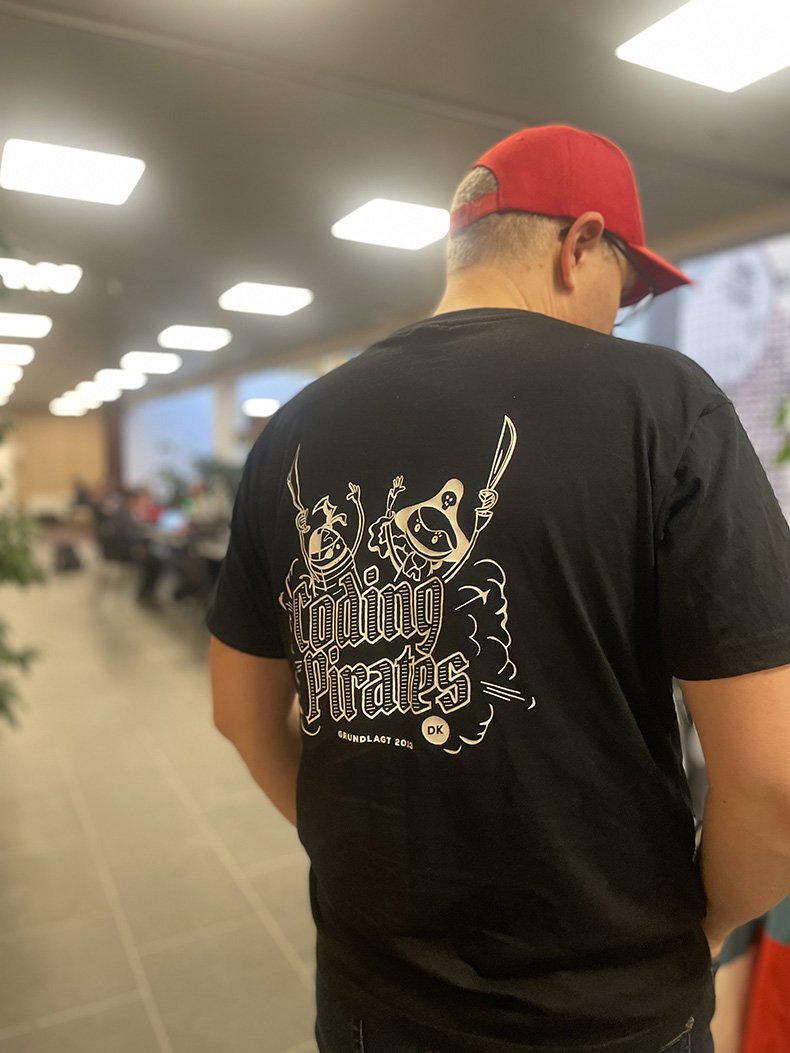
Little pirates learn to code at INCUBA every Wednesday
Coding Pirates is a nationwide volunteer organization that gives children and young people the opportunity to explore the world of technology.
INCUBA Katrinebjerg provides the setting for one of three departments in Aarhus. In GameDev, as the INCUBA-based department is called, children and young people learn how to design and code their own computer games.
“Each season, the children are introduced to a new theme that frames the game they will develop. This year, the theme is The World’s Smallest Game,” says Thomas Braad Perret-Gentil, chairman of the three Coding Pirates departments in Aarhus.
During the first two weeks, the “pirates” are guided through the ideation phase, after which they are set free for the rest of the season, which ends in early June, to develop their games.
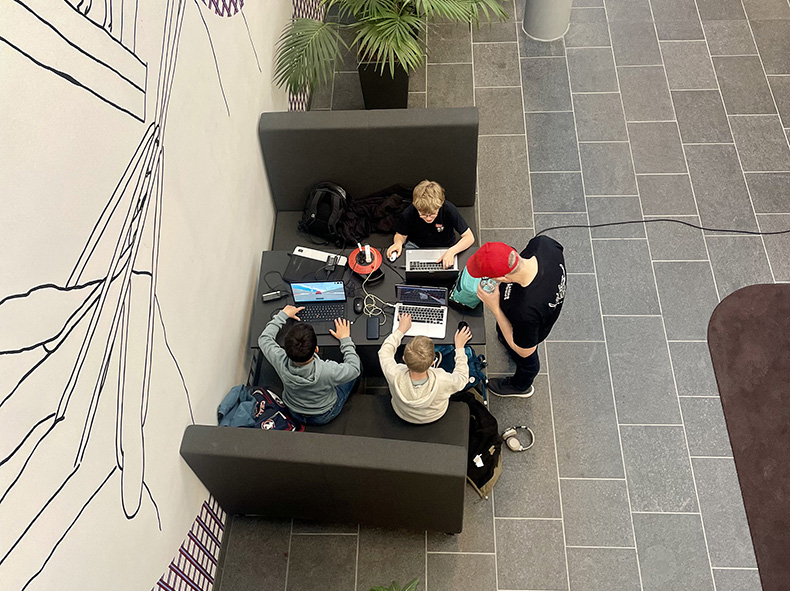
INCUBA as a setting
That Coding Pirates is located in the middle of an environment shaped by entrepreneurship, technology, and innovation is no coincidence. At INCUBA, the children encounter surroundings that reflect the world technology is part of.
Mia Jacobsen, a volunteer “captain” in Coding Pirates GameDev at INCUBA Katrinebjerg, sees INCUBA as an ideal base:
“It’s an amazing setting for our club evenings. Large, open spaces where the children really have room to spread out and draw inspiration from the companies based here.”
She also points out that INCUBA plays an important role in recruiting volunteers:
“Our presence at INCUBA Katrinebjerg makes it a natural place to recruit volunteers. Several of our volunteers work at companies based here, which makes it easy for both them and us that an association like ours is located so close to a strong IT environment.”
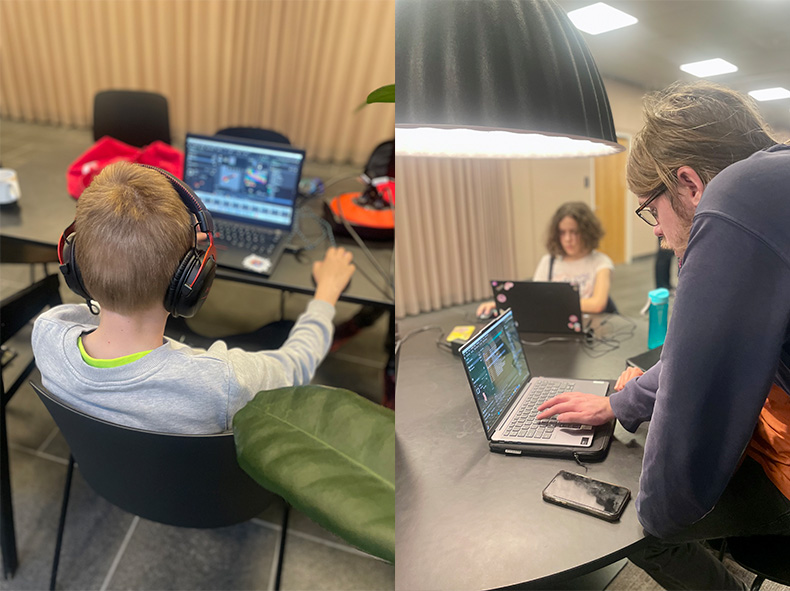
More than just coding
At Coding Pirates GameDev, it is not only about learning to code but about developing a fundamental understanding of technology and problem-solving. Children build concrete IT skills through working with programming languages while also learning how to find solutions and acquire new knowledge on their own.
Thomas Braad Perret-Gentil highlights that they aim to attract pirates who want to learn how to build games, and he is repeatedly surprised by their abilities:
“Some of them are incredibly skilled at what they do. I work in the industry myself, and sometimes I’m completely blown away by what they can do.”
Beyond technical skills, children also develop social and creative competencies. Through group work and negotiating their different game ideas, they build networks with other children and young people who share an interest in IT and learn how to compromise.
“We are truly proud to offer a leisure activity for children and young people who may not fit into the traditional club structures we have in Denmark,” says Mia Jacobsen.
Club evenings create a space where they can immerse themselves in interests they may not encounter at school.
Experiences that build confidence
Although Coding Pirates does not aim to educate future programmers, the organization hopes that children will take with them a basic understanding of technology and a desire to keep learning. Mia particularly highlights the importance of positive experiences:
“We hope that whenever they get an idea, they have the courage to pursue it, and when they encounter a problem along the way, they have both the ability and the motivation to find a solution.”
She emphasizes that it is about giving children and young people a strong foundation in digital understanding and preparing them for a future where technological literacy is increasingly important, no matter which path they choose.
Coding Pirates hosts club evenings at INCUBA Katrinebjerg every Wednesday from 5–7 PM. The program is open to children and young people aged 11–17 and is run by dedicated volunteers.